
About ScholAR
ScholAR helps students learn about their learning habits while adapting to their learning styles, prolonging engagement while building their application, retention, and comprehension skills through a fun AR experience. ScholAR offers educators the opportunity to manage their classes, determine the exact moment a student begins to disengage with their content, and provide recommendations to fix it without overstepping.
Skills: Literature Review, Competitive Audit, Rapid Prototyping, Ubiquitous Computing
Approach
Blend ubiquitous computing and gamification principles to create a context-aware system to help educators and students.
Researcher and Prototyper
Tools
FigJam, Figma

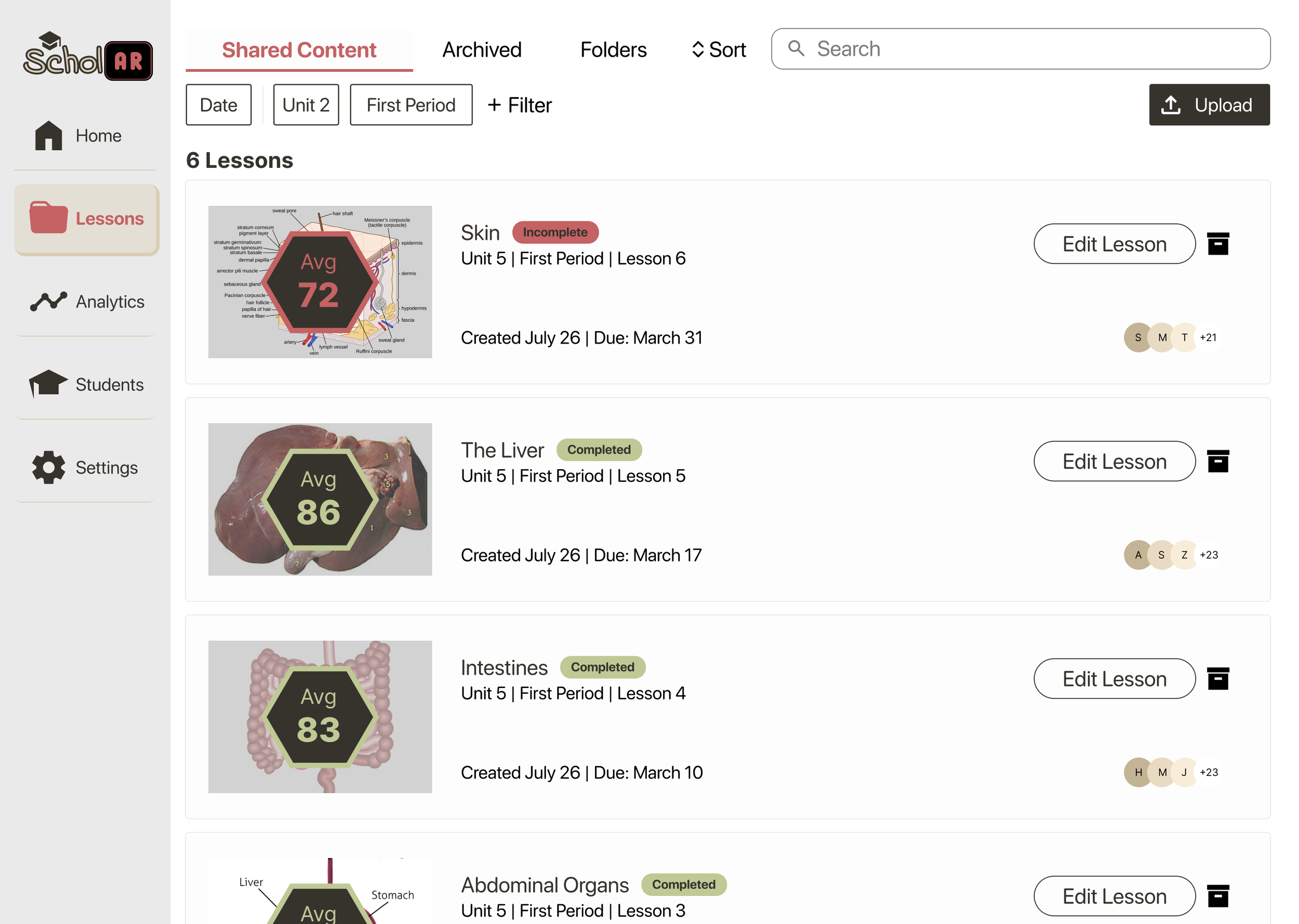
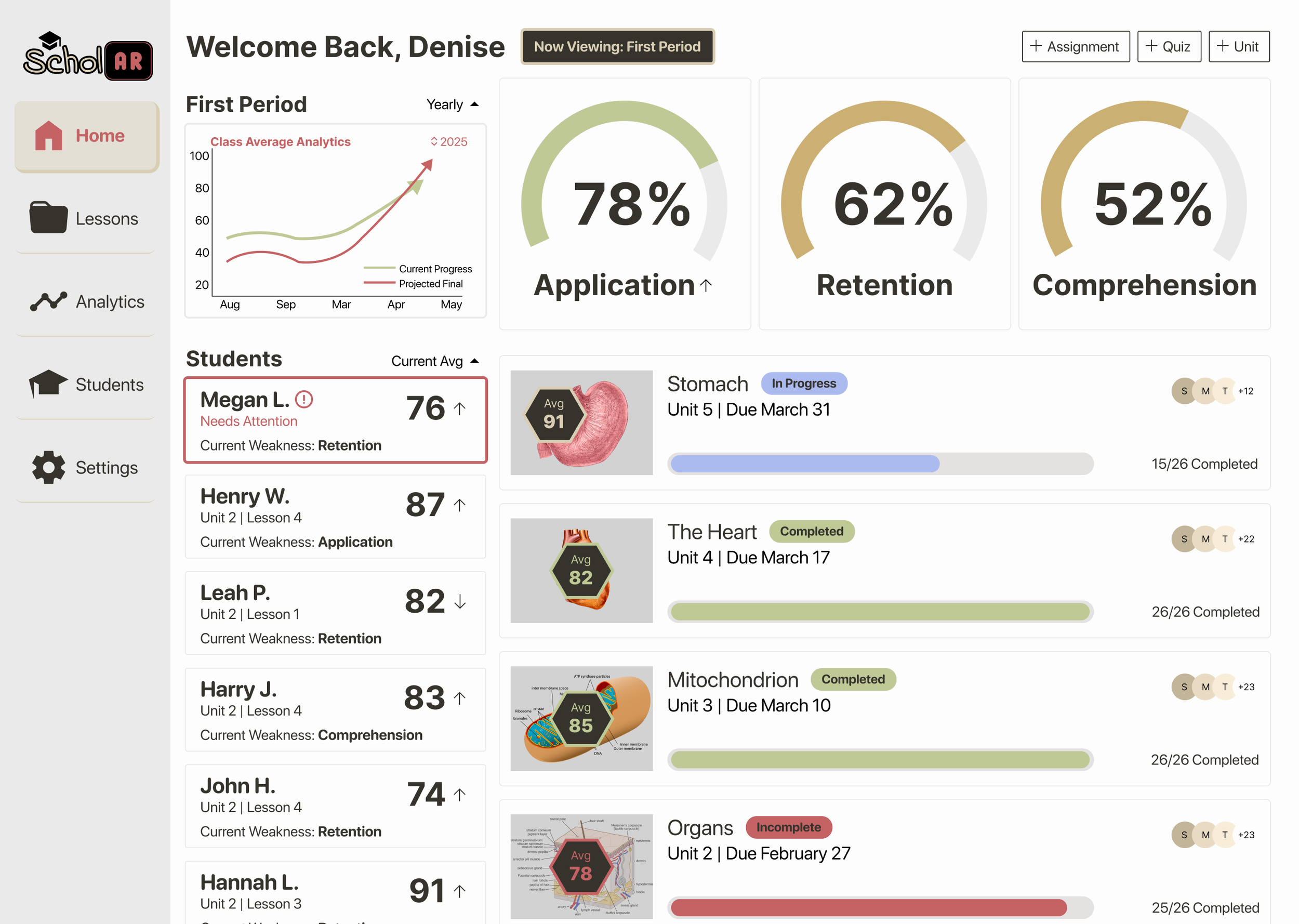
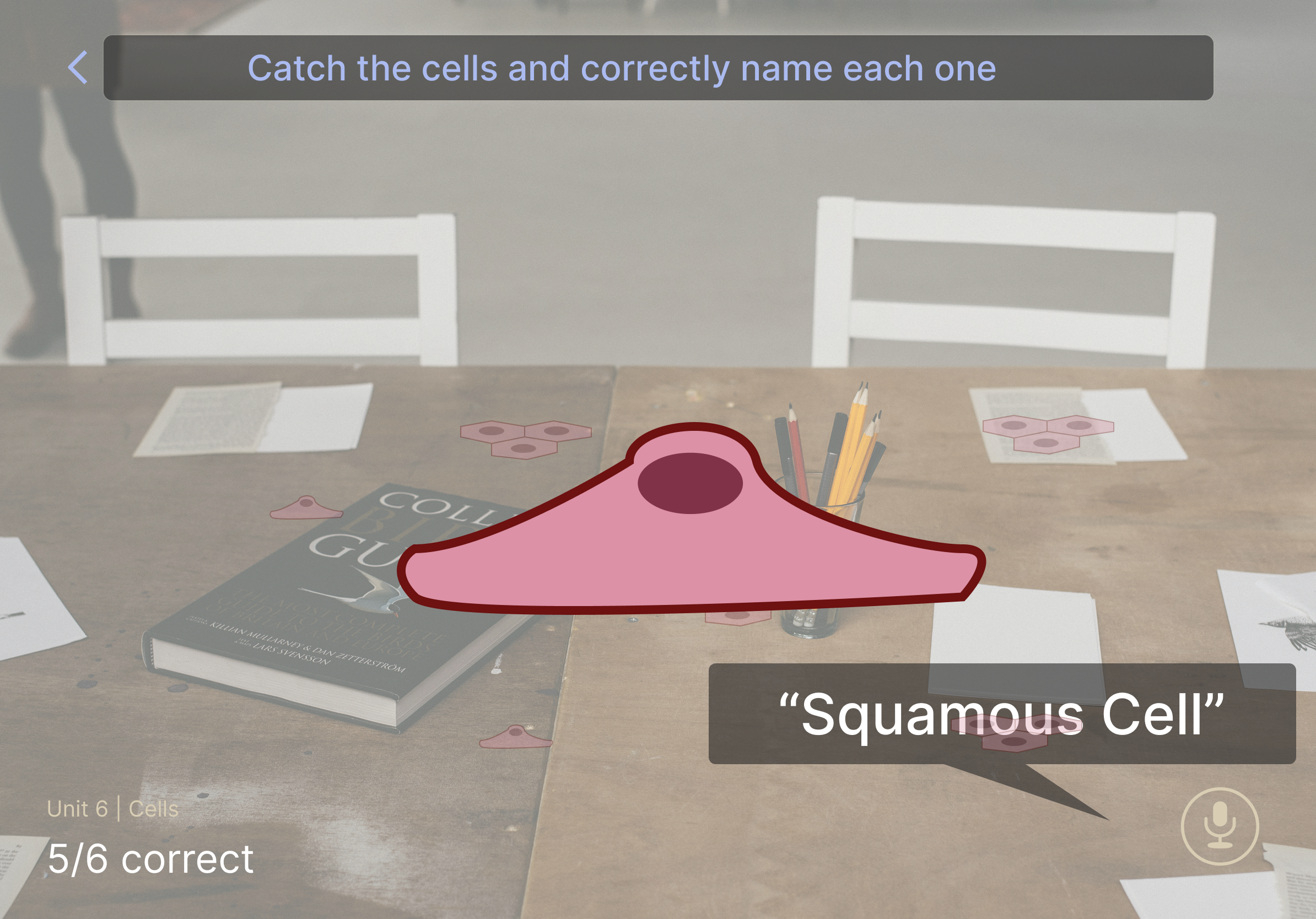
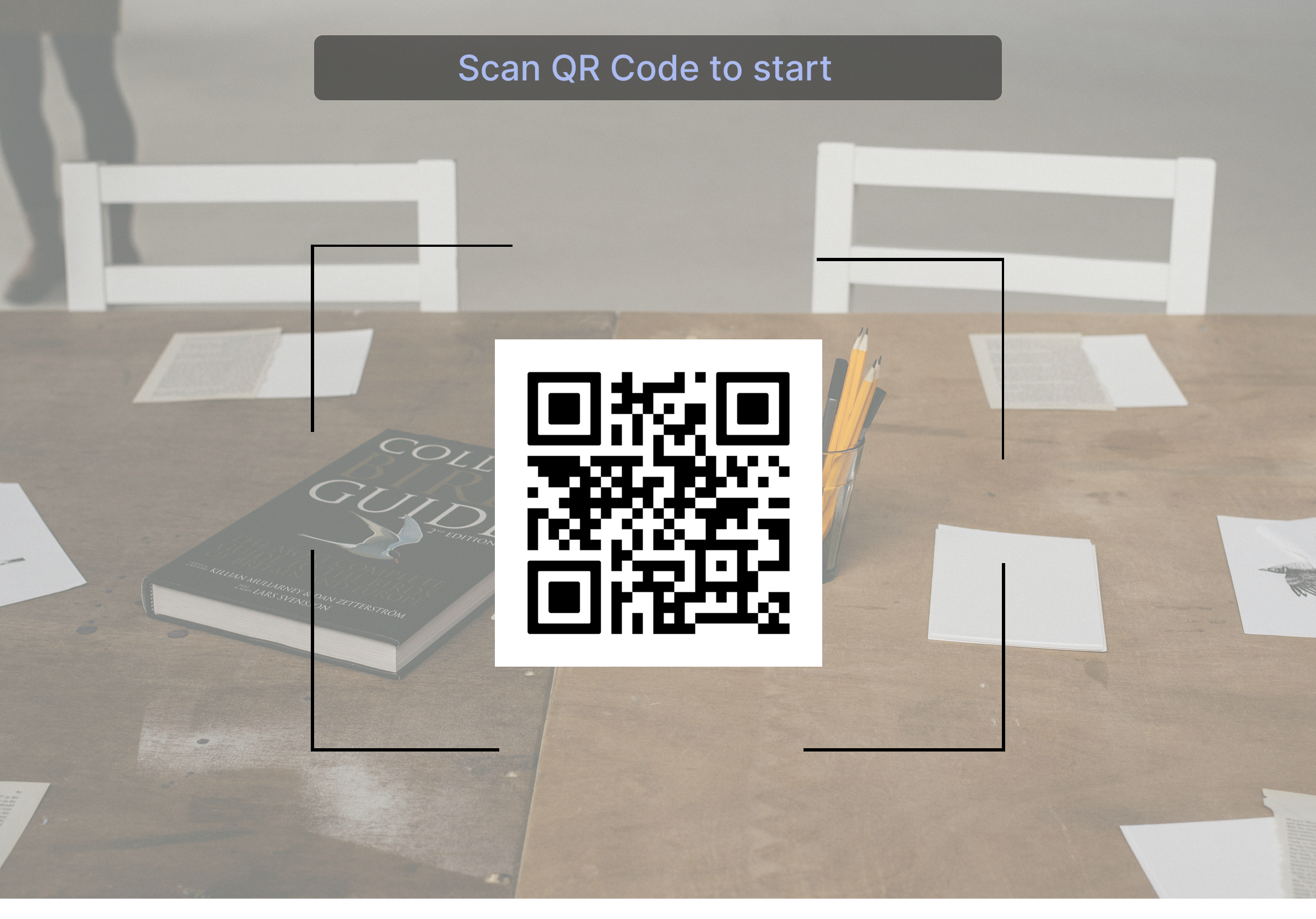
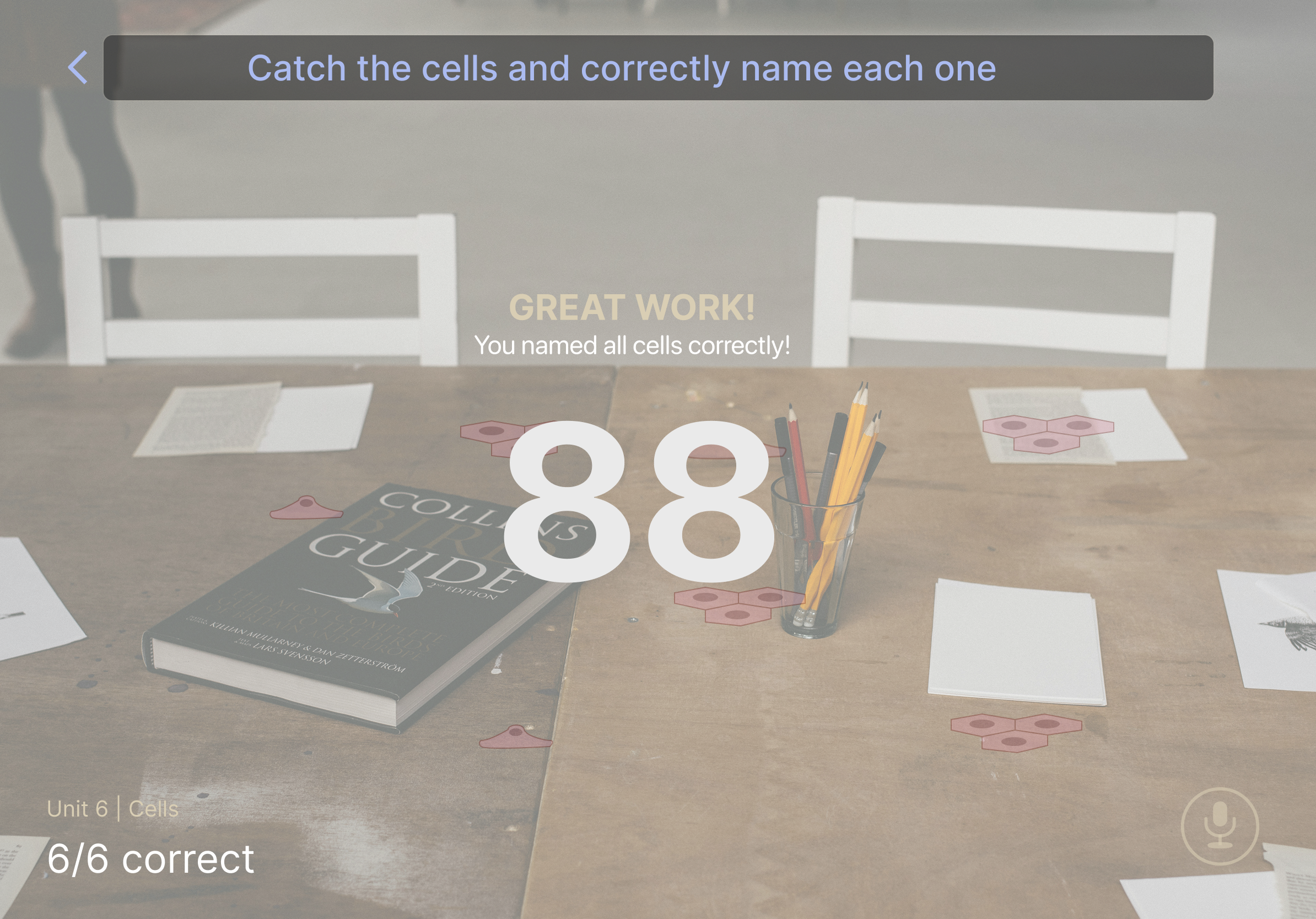
Using RFID tags, teachers upload their learning units to create context-aware activities. To ensure accuracy, RFID is combined with GPS technology or Wi-Fi to provide real-time interaction and feedback. Students then use their mobile devices to scan the tags and collect data from real-world objects to complete tasks within their learning environment.
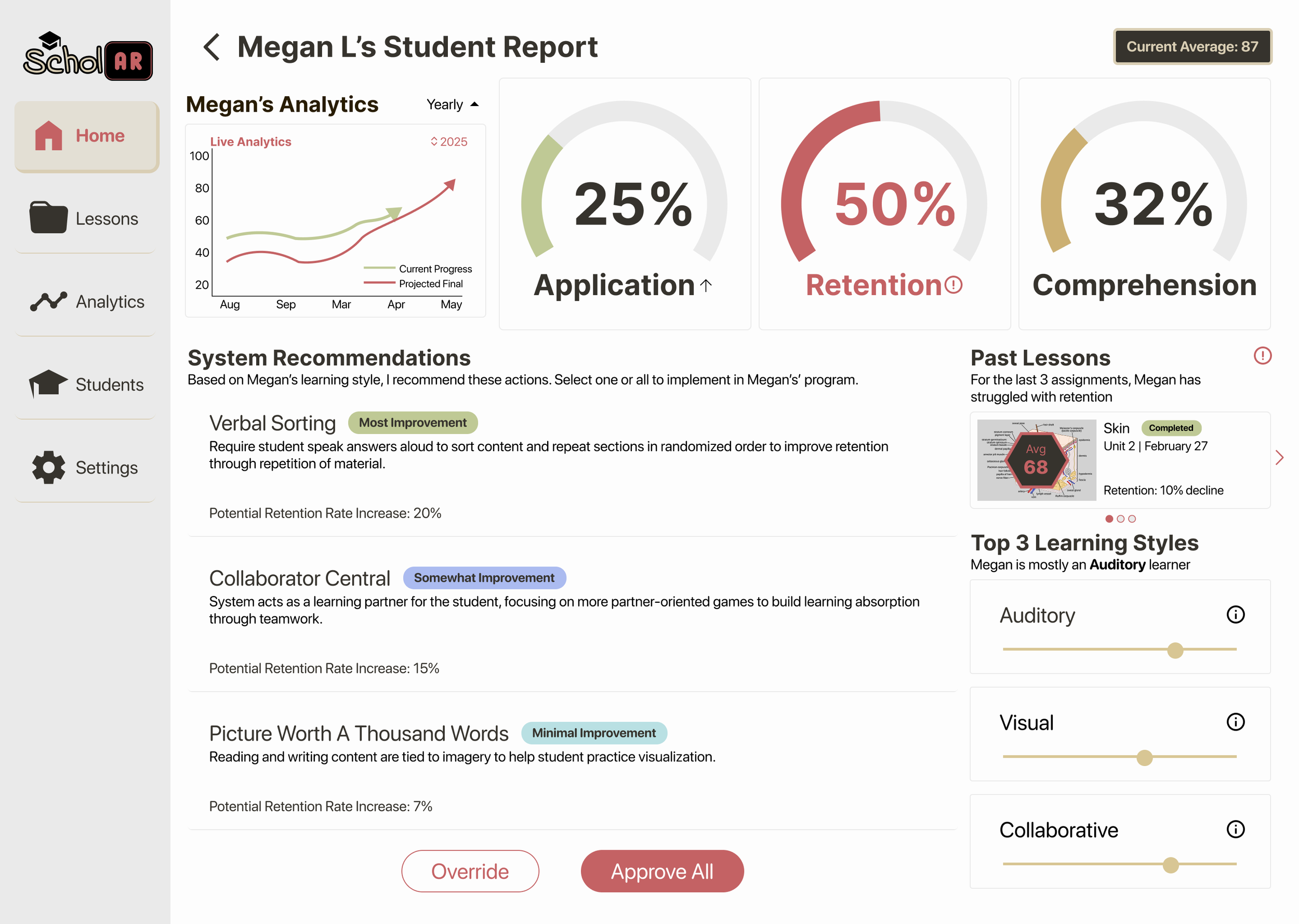
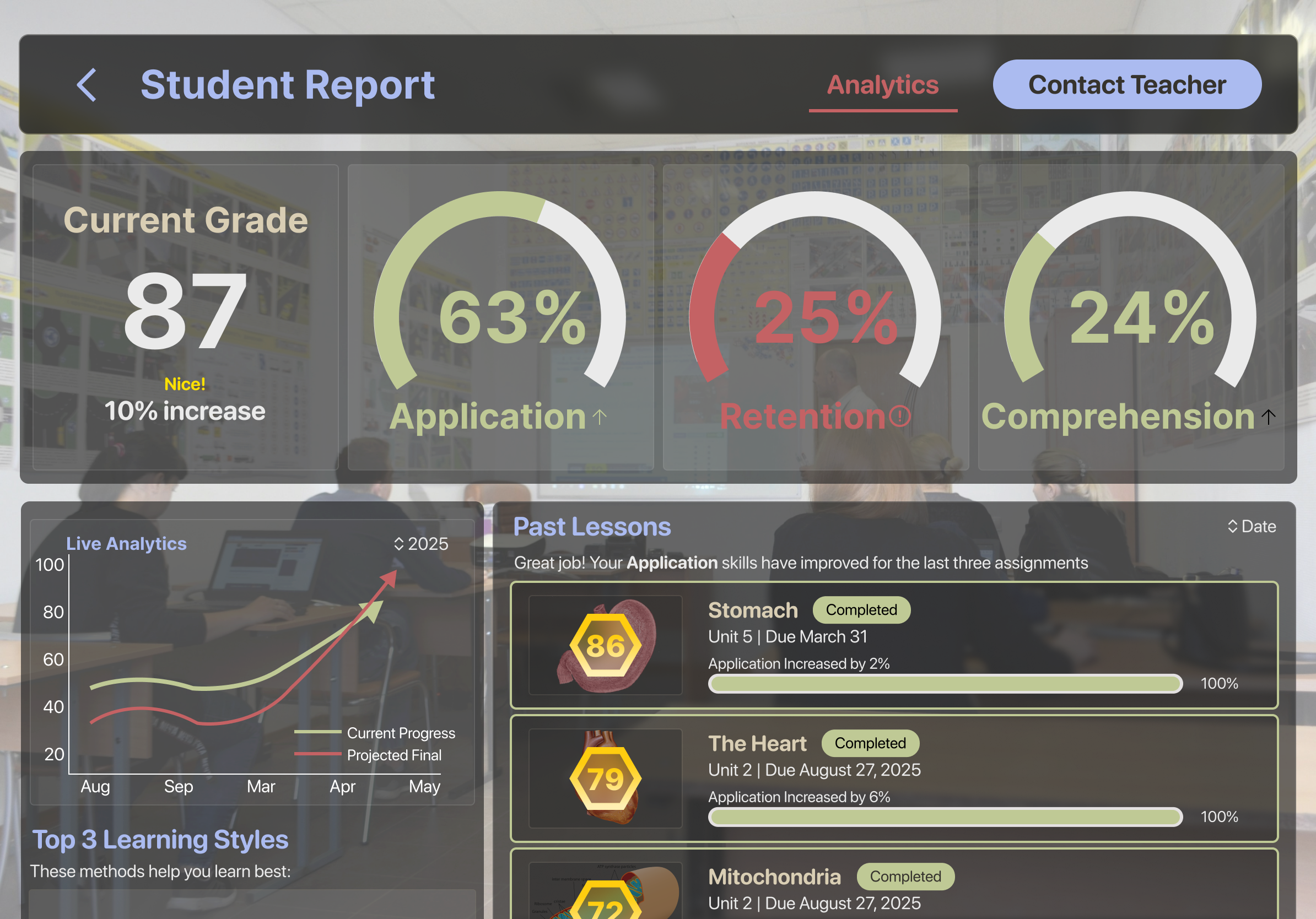
Learning units adapt based on the student’s environment while also informing the teacher of areas where a student needs improvement, such as application, comprehension, or knowledge retention.
Key UnderstandingIt is essential to strike a balance between calm computing and gamification principles. The system should enhance the experience of both student and educator without sacrificing autonomy.
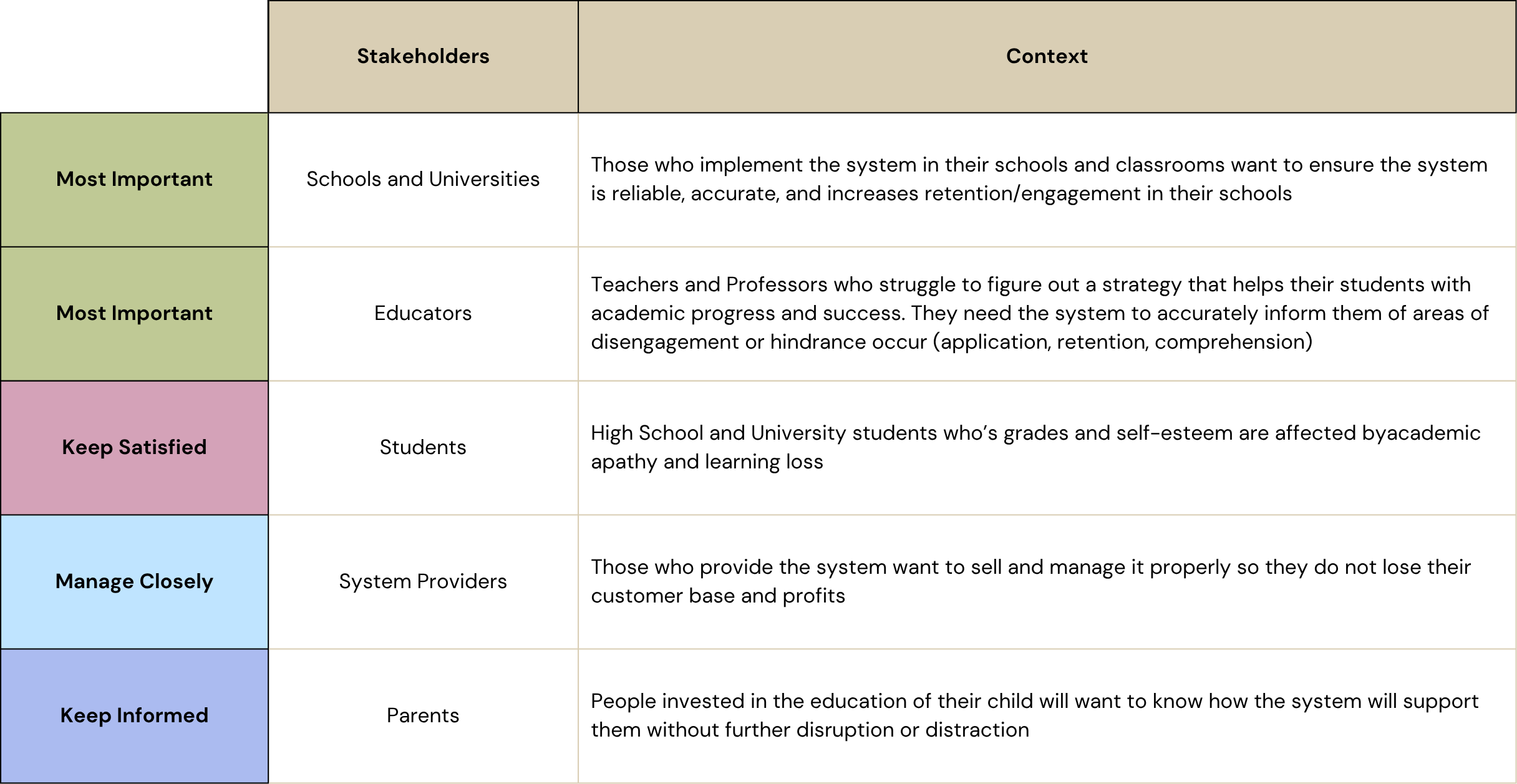
Academic apathy is characterized by a lack of motivation, interest, goals, and disengagement from learning activities, with low self-esteem and social adjustment being indicators of apathy in students.
1
Combining gamification elements with ubiquitous computing technology would push the boundaries of immersion by adjusting the same game to the player’s environment, resulting in more natural interactions through voice commands, gestures, biometric data, and interactive objects.
2
It is essential to strike a balance between calm computing principles (ambient cues, contextual awareness, subtlety over control) and gamification principles (engagement, active learning, heavy guidance/assistance) to ensure a supportive and healthy experience for the player.
3
Privacy and EthicsThe system will primarily be used in classrooms, especially in districts with higher incidents of learning loss reported, and in school yards/outdoor areas.
Technological Context
Haptic feedback for voice and gesture-based interactions
RFID tags/reader to upload learning units and tasks (management), real-time updates
GPS and WiFi for location accuracy
IMU sensors to capture movement
Constraints
Privacy — ensuring privacy when every object is potentially a game element, as well as keeping student data (grades, name, etc.) limited to essentials only, and secure
Consent — some parents may not want their children under 18 interacting with the technology
Ethical — if someone is already struggling with gaming addiction, the seamless blend between the real world and digital that ubigames offers may exacerbate the issue
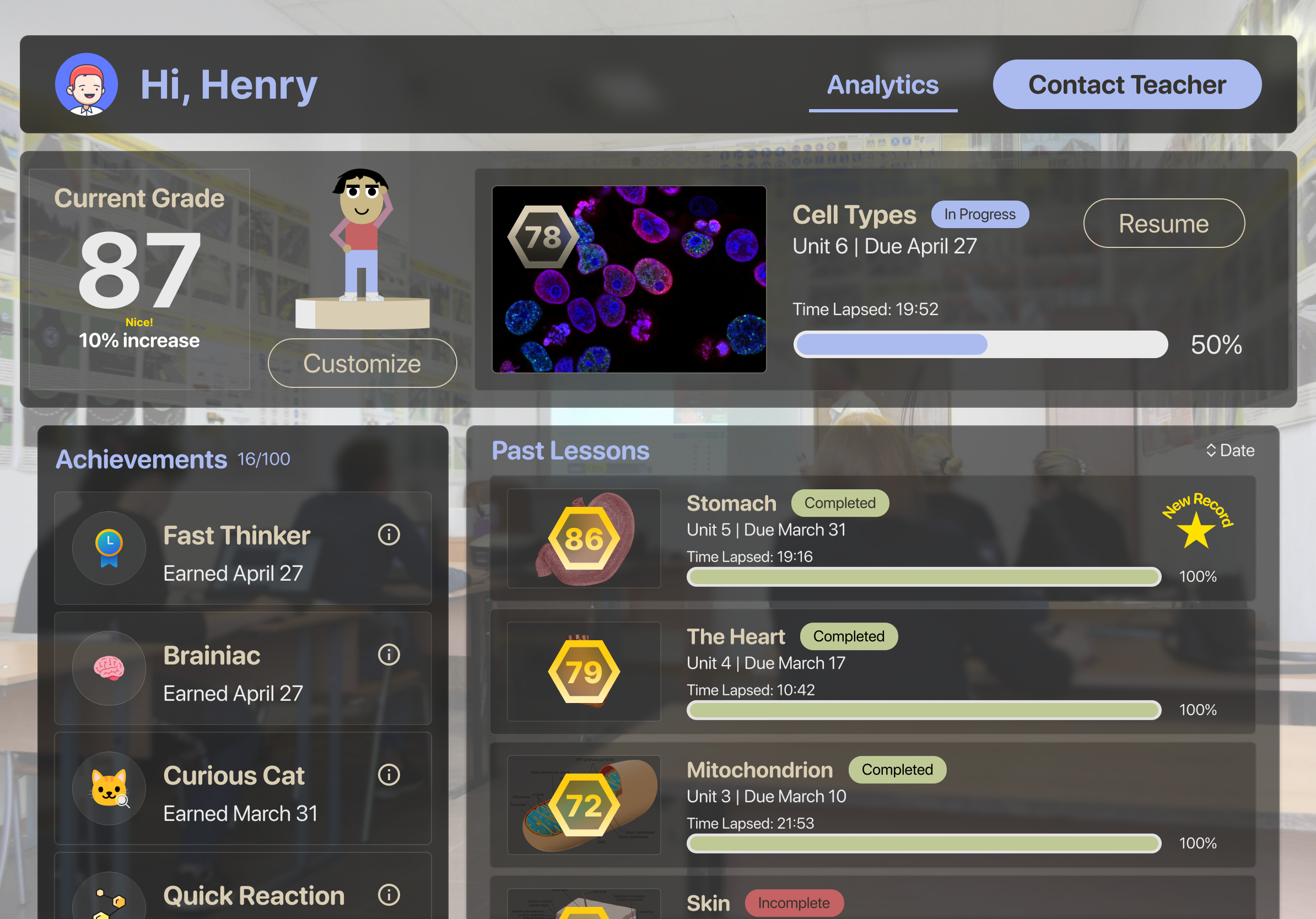
WireframingI considered a leaderboard in my first iteration, but having your rank displayed to your peers may be embarrassing or add to self-esteem issues. Instead, I decided that students can use their elapsed time to compete against themselves to improve and track retention progress.
Teacher Interface Wireframe (Click to Enlarge)
Student Interface Wireframe (Click to Enlarge)
Conclusion