
About Echo’s Awakening
Highly-stressed and overworked Echo wakes up from a nap in a childhood fantasy world filled with old imaginary friends who desperately need her help. The world’s been overrun by different goblins and monsters whom Echo must defeat through a series of puzzles and interactions to collect fragmented soul pieces (emotional regulation techniques). Using the repaired stone (collected techniques), Echo can defeat the monster and return to the real world with new skills to implement in her personal life.
Skills: UI Design, Research, Prototyping, Wireframing, Illustration
Approach
Using Goal-Directed Design, my team had 8 weeks to craft a game design for the Nintendo Switch that gamifies the therapy experience.
Team Lead
Tools
MS Teams, Discord, FigJam, Figma, Clip Studio Paint, Blender, Filmora


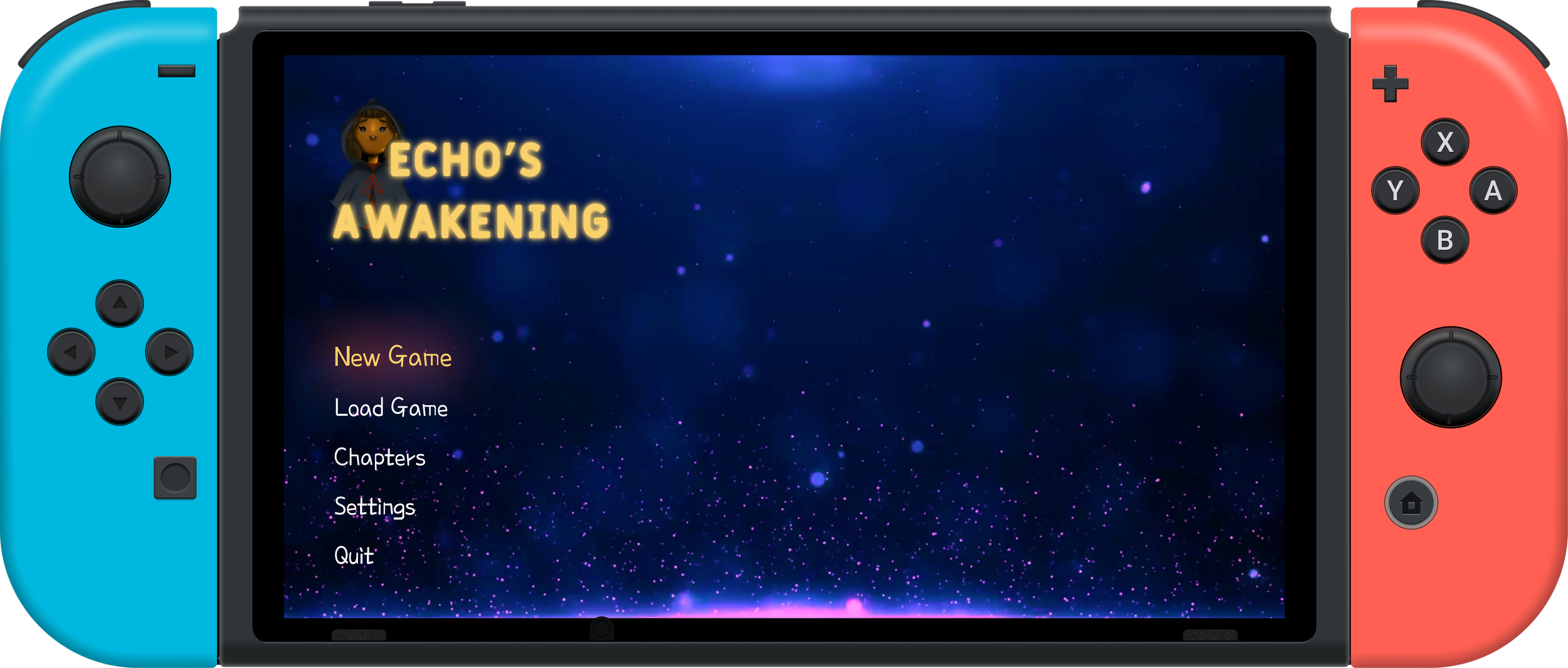


Echo’s Awakening helps users learn new skills in a safe and reactive environment, where the gaming experience acts as a rehearsal of new behavior models.
Designed for the Nintendo Switch
Key UnderstandingNon-therapy games foster discussion, but lack engagement. We need a middle ground between mindless distraction and mindful interactions.
Applying coping skills can be a struggle for those who have trouble regulating themselves. Usually, after each session, the client promises to practice these new strategies the next time they feel dysregulated, but they forget the recommended strategies or are unable to recognize their triggers/stressors.
1
The game should feel like an emotional journey that lets the player grow with their character. Similar to play therapy, the game acts as a medium of expression. Simultaneously, the engagement offers a way to foster connection and build rapport.
2
Therapists can model behaviors, such as losing gracefully and laughing at their mistakes instead of having an impulsive, emotional outburst. Demonstration of these behaviors helps gamers, particularly young gamers, understand how to react calmly to their in-game losses (and real-life mistakes) without jeopardizing relationships or acting out of frustration.
3
For the more engaged user to improve their mental health, strong gaming features must be prominent. Without the sense of achievement or stakes, it diminishes the enjoyment and starts to feel like “work” instead of play.
4
InterviewsOriginally, we planned to take a more assertive approach, explicitly displaying exercises and their purposes throughout the game. Until we learned…
Interviewees prefer the game involve more passive learning with tips and skill highlights at the end of chapters.
While choice-based interactions in the game enthused them, they found the concept of a timer for decisions anxiety-inducing.
Interviewees highlighted the desire to collect all items in a game to feel a sense of achievement, often replaying sections of a game multiple times just to achieve this goal.
The therapists want opportunities to facilitate conversation with their clients, particularly citing the pause menu as a chance to discuss in-game progress and decisions.
Of our five interviews, two of them were play/video game therapists, one a game developer, and the remainder were students — aged from early twenties to thirties. Our interviews helped us define two primary user types: Therapist and Casual Player.

Joanne Michaels, 40
A remote play therapist from Ohio who enjoys gaming and karaoke in her free time.
Therapist
Joanne’s Goals:
to play the game with patients to observe behavior and teach lasting coping techniques during sessions
to have the game feel personable and allow opportunities to build rapport/converse in a safe space
to feel a sense of accomplishment for both themselves and the client
Joanne wants to be someone who uses more effective therapy tools to help their clients and become a better therapist

Clementine Martini, 25
An audiobook narrator and writer from Ohio who enjoys gaming in her free time.
Casual Player
Clementine’s Goals:
to use the game for entertainment while passively picking up coping skills
to explore a digital game environment that allows immersion and relaxation through constant progression
to feel a sense of achievement by overcoming the challenges of the game
Clementine wants to be someone who can translate therapeutic coping skills from a digital world to a real life scenario and gain control of the stress in her life
FrameworksWireframing for a game differs from that of a mobile app or desktop application because it requires consideration of button mapping and controller interactions.
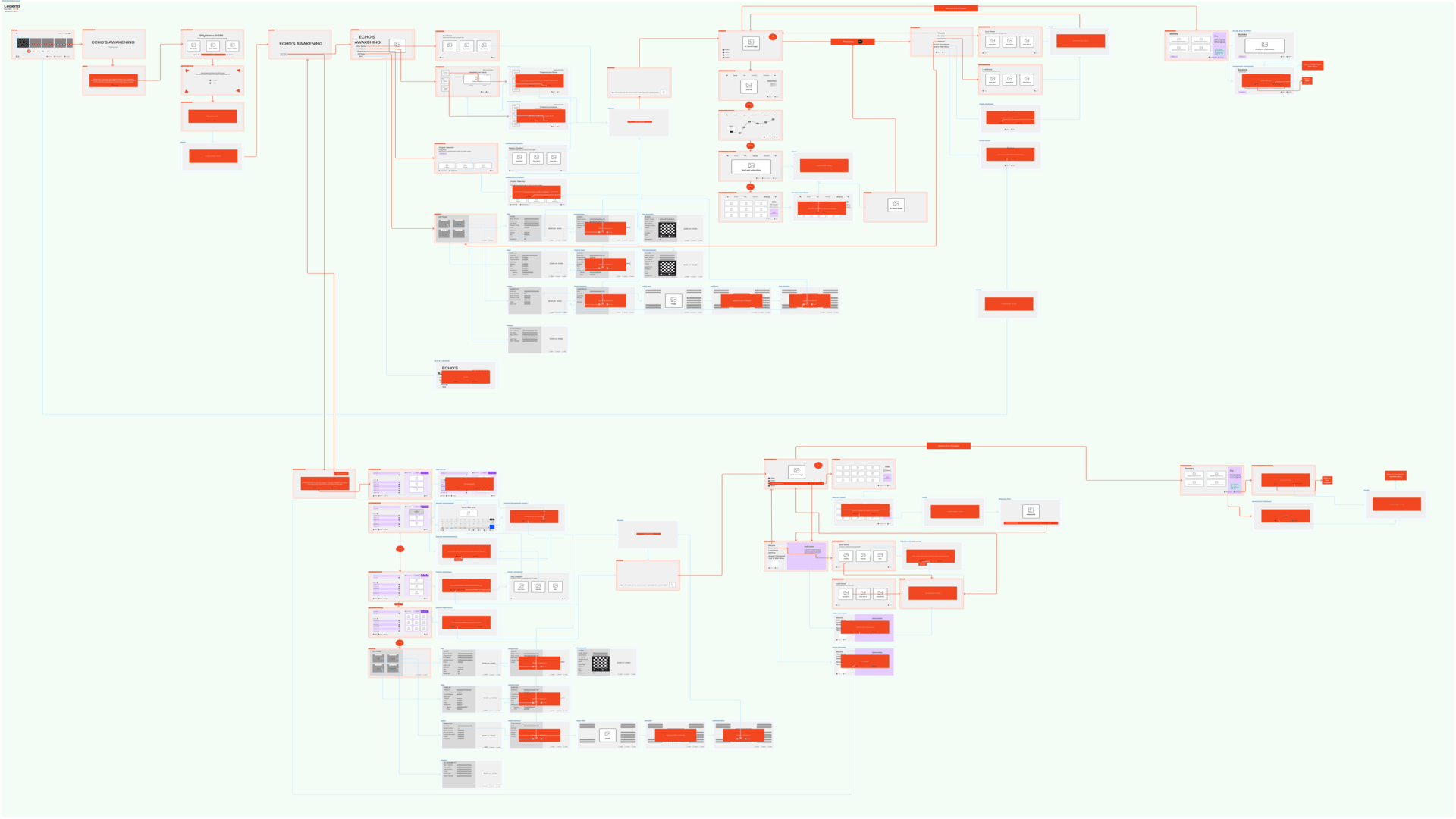
Lo-fi Sketches

Prototyping
In crafting our prototype, we adhered to a 1280 x 720 frame size to mirror the pixel dimensions of a Switch screen. I implemented an 8-pixel grid system comprising 8 columns, complemented by 64-pixel margins and 20-pixel gutters. To aid each member in their frame setup, I had a “Spacing and Measures” section to our Figma that highlighted the margins and placements of elements.


Testing and RefinementWe invited three participants from the research phase back to test our game design. I went back into each frame and made sure elements adhered to our style guide.

Before

After

Before

After
The Art of Echo
I took inspiration from various games to develop our art style and theme, such as: Life is Strange, It Takes Two, Little Nightmares and Dreams (PS4). In addition, I watched tutorials on YouTube to teach myself how to 3D model our main character and other game assets.
Tools:
Clip Studio Paint
Blender
Filmora (for the introductory cut scene)


Lessons Learned🤯
Embrace ambiguity and abandon ego.
We were enthusiastic about crafting a game, which is great. Yet, the endeavor of gamifying therapy presented us with many avenues to explore, and our enthusiasm sometimes led us astray, overwhelming us with possibilities. However, it was crucial to maintain focus on the project's scope and our users' objectives. Throughout each phase, we consciously narrowed our focus and remained steadfast in our commitment to the overarching goal. Embracing uncertainty was a key aspect of this process, trusting that despite the unknowns, the journey would ultimately lead us to the right path.
Communication and organization is key.
Delegating and tracking tasks for this team was essential to the design process. Without my taskboards to track our progress and creation of features, we could have missed important interactions and screens. In addition, fostering an environment where my team felt comfortable to express their opinions and ideas led to a collaborative creative process that optimized our strengths.
When designing for individuals with disabilities, you're essentially designing for everyone.
We made concerted efforts to provide clear explanations beyond mere color alterations and visual shifts. Ensuring clarity in button mapping was a priority, and I entrusted a team member who had a strong passion for accessibility with the responsibility of creating settings that empower users through customization. This approach aimed to cater to a diverse range of user needs and preferences, putting control directly in their hands.